
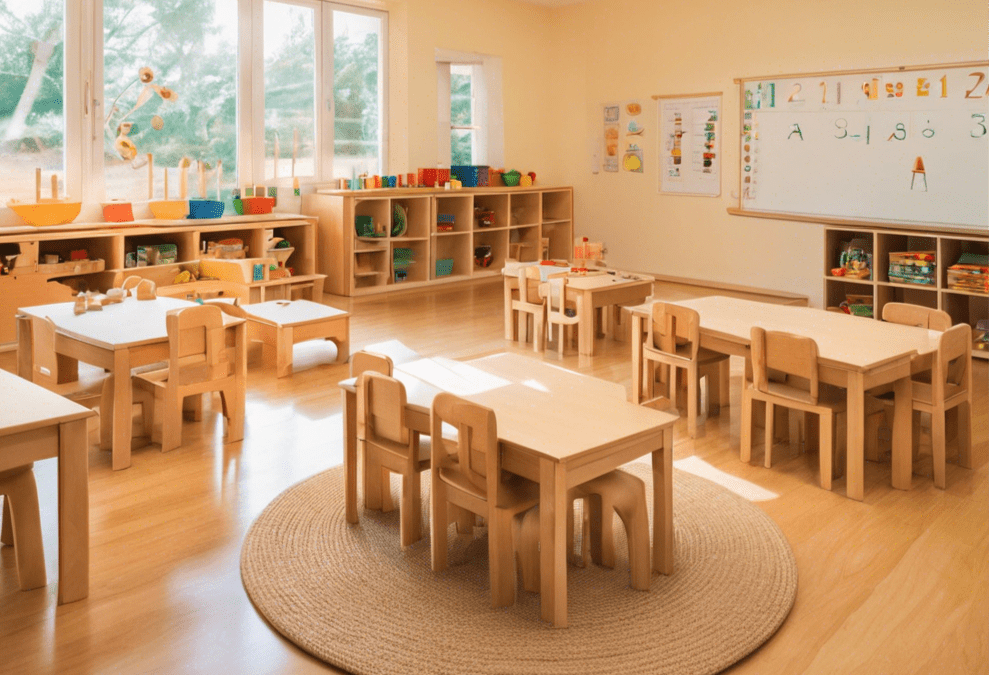
The main elements of a Montessori classroom are:
a) A well-prepared classroom
b) A progressive learning curriculum that meets the developmental milestones
c) A classroom that sustains and supports spontaneous learning
d) Well-trained and self-driven educators
A) A well-prepared classroom
A Montessori classroom should have its materials displayed systematically. The child must visually understand that this prepared environment is for them to explore and engage with. (Although we adults understand that there is a systematic way in which the child will be introduced to and explore the materials displayed on the shelves, it’s essential for the child to feel a sense of freedom in choosing the materials they wish to work with.) It is important to allow the child the freedom to choose the material they wish to work with, They have to have the sense of belongingness, which will help them practice the materials and develop mastery. The child should also be able to recognise their own progress, leading them from one material to the next and this is only possible in a well prepared classroom.


B) A progressive learning curriculum:
The directress plays a vital role in creating the learning path for children at each developmental stage. While Maria Montessori provided us with a framework that guides what should be introduced to a child at different ages, it is essential to have a detailed, individualized learning plan. This plan should light the path of enlightenment, enabling the child to develop confidence in using their learned skills. The child should be able to liberate themselves in a social setting, exhibiting the skills they have acquired.
C) A classroom that supports spontaneous learning:
Children are naturally curious but are often believed to have short attention spans. It is important for the educator to be well-prepared to help the child recognize that their observations are meaningful. The educator should provide supportive and developmental information to enhance the child’s learning journey. For example, I once had a child who was observing a sunbird picking leaves and twigs from our school garden. In that moment, it was crucial to share my knowledge about how the bird builds its nest. This sparked the child’s interest in learning more about the bird’s life cycle. Providing relevant information when a child is making observations is crucial to making learning meaningful and supporting the developing mind.


D) Well-trained and self-driven educators:
Well-trained, self-driven educators are key to nurturing the innate qualities of each child. Every child is unique, and their exposure to the world and their interests will vary. Some children may have learned about the world through books, while others may have gained knowledge through experiences, such as field trips. For example, we once recreated the Singapore Zoo in our classroom. We had brainstorming sessions to discover the needs of the animals and discussed how humans can support the natural environment. Some children had visited the zoo, while others had not, but the planning and subsequent field trip enriched the learning experience for all. Therefore, it is important for educators to be both well-trained and self-driven, taking the initiative to create a learning journey that engages the child’s interests.
If you are looking to enrol your child into a montessori school, look out for these four elements and you will not go wrong!